Our History
A living monument
A place of worship for nearly 1,000 years
St. Mary the Virgin Church has stood in the village of Burpham for nearly 1,000 years. It is believed to have been first built around the 11th century, making it a site of significant historical interest.
Burpham’s ancient church stands opposite the entrance to the ‘Burgh’, a fortified enclosure high above the river Arun. This kept watch over the river in the centuries before Arundel castle was built, and gave the village its name.
Norman Origins
Established soon after the Norman Conquest, St. Mary’s reflects the grandeur of Norman ecclesiastical architecture. This period saw a wave of church building across England, as the Normans sought to establish their religious and political dominance. St. Mary’s was no exception, with its original structure showcasing the robust and practical design favored by Norman builders.
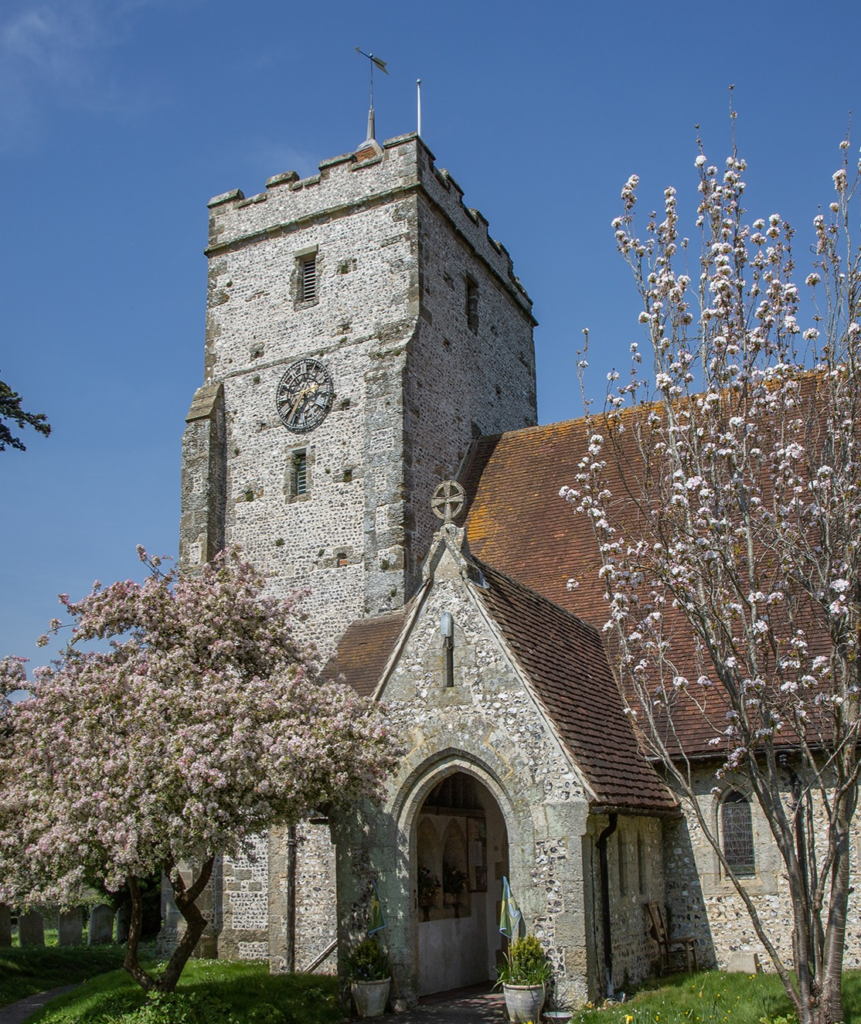
The tower, a defining feature of the church, dates from a later period in the 15th century and still stands strong today. Built from local flint and stone, it embodies the Romanesque style, characterized by its sturdy appearance and rounded arches.
Medieval Additions
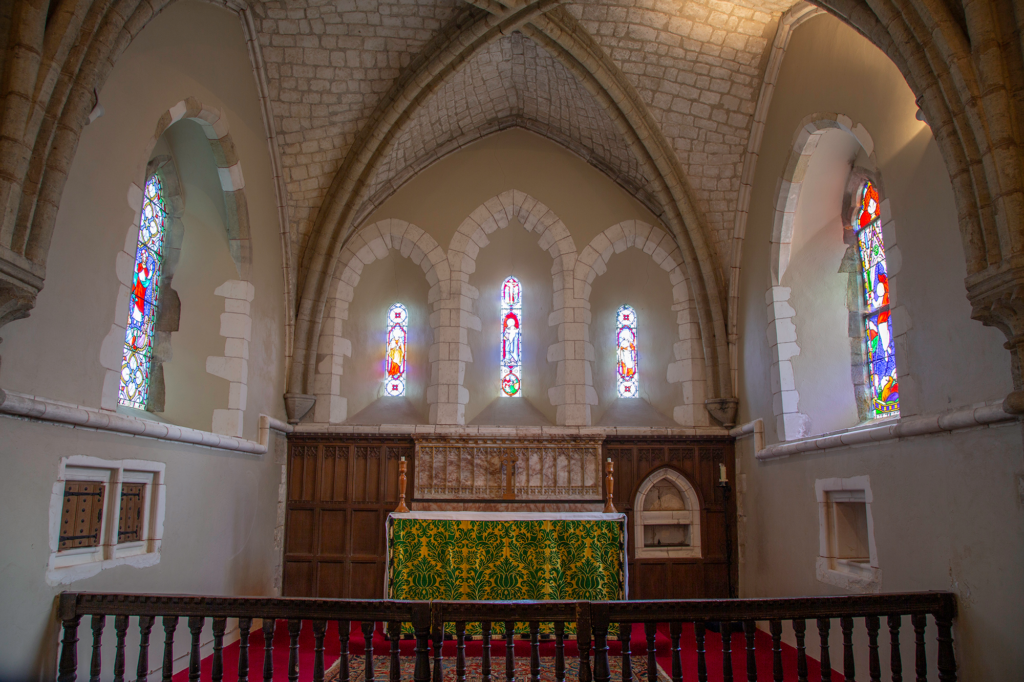
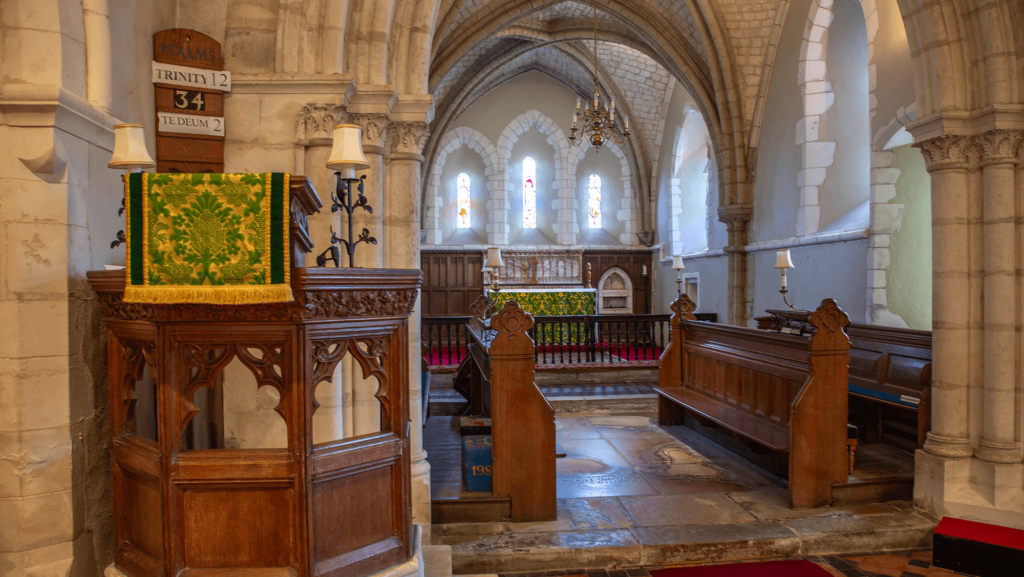
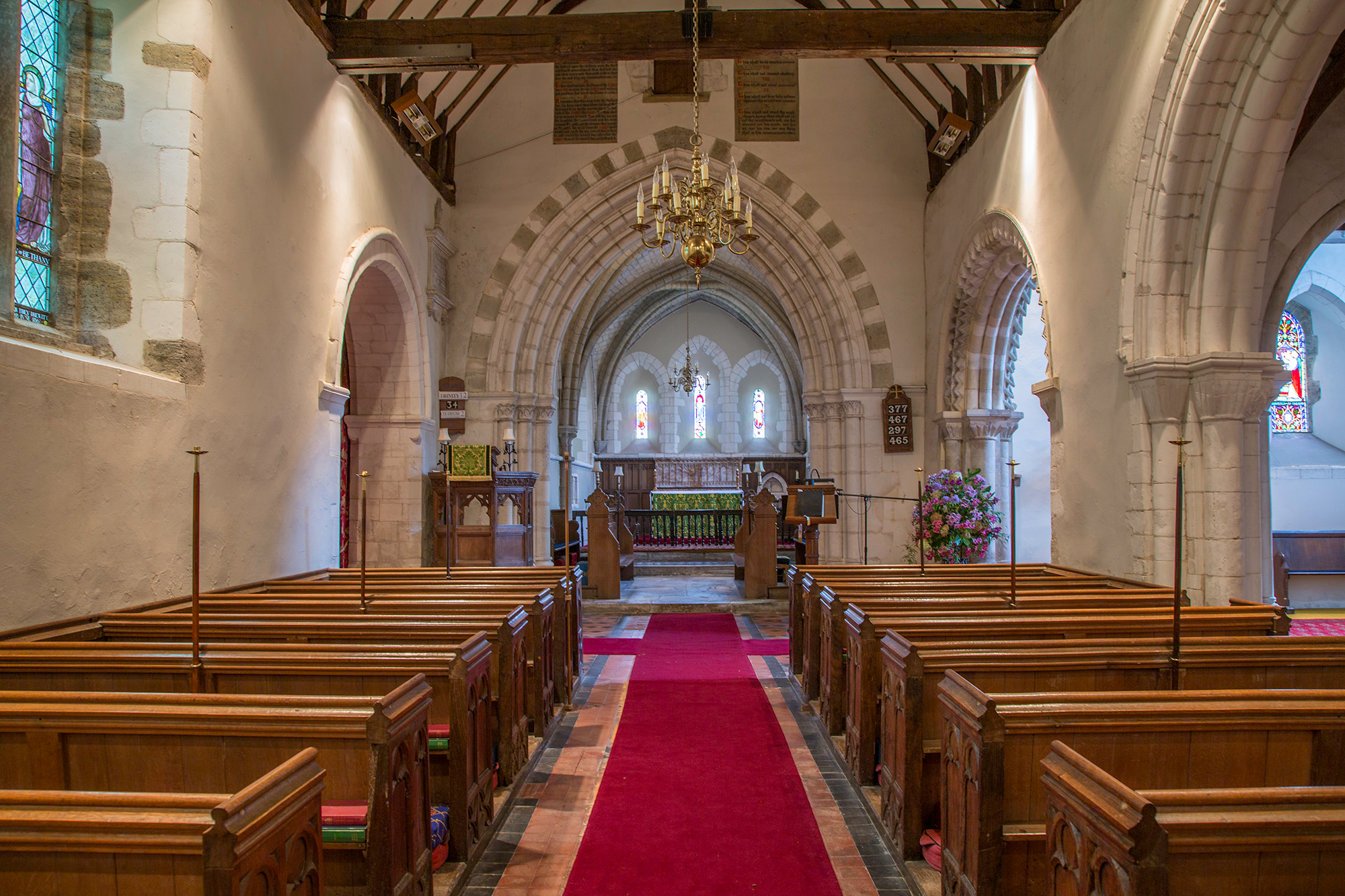
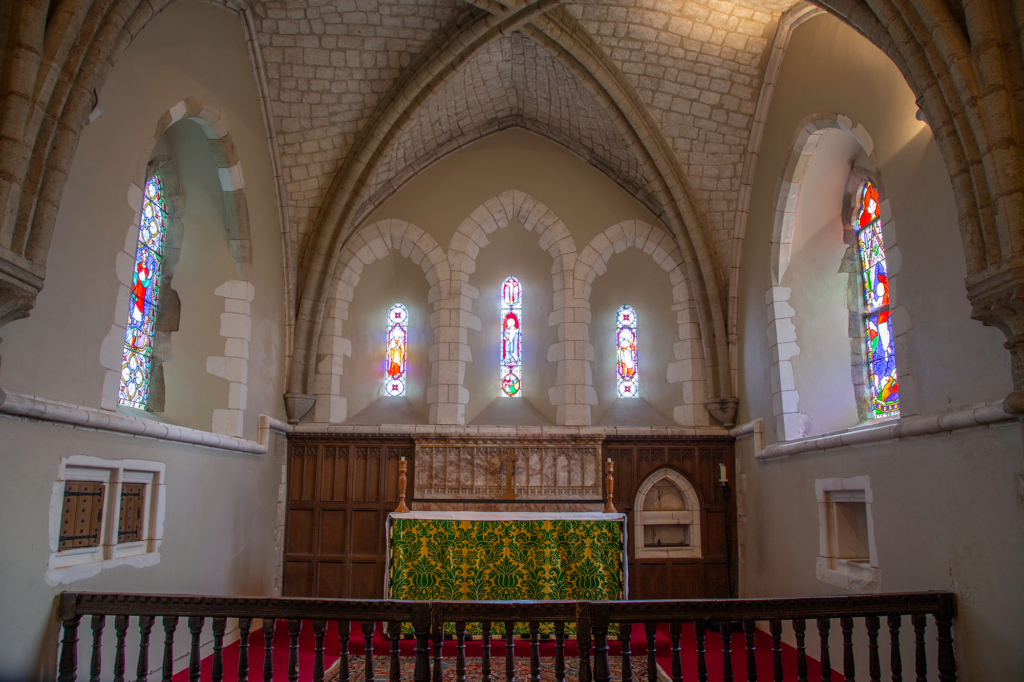
Over the centuries, various additions and alterations have been made, particularly in the medieval period. As Burpham grew into a small but significant settlement, so too did the church evolve to meet the needs of its parishioners. Over the centuries, the church was expanded and modified, with Gothic elements gradually introduced, such as pointed arches and large windows, which allowed more light into the building. The nave dates mainly from the 12th century with the choir being somewhat later in the 13th century. They both give the church its distinctive layout
Victorian Restoration
In the 19th century, the church underwent significant restoration, which preserved its historic charm while updating it for modern use. The church had fallen into some disrepair, with the aisle, the porch and the south transept all having been taken down. These were rebuilt by the architect T. G. Jackson in 1869. He also removed the ceilings to expose the old roofs, replaced the chancel arch (which was cracking) and introduced new furniture, preserving the medieval bench ends.
A living monument
(20th century to present)
In the 20th and 21st centuries, St. Mary the Virgin Church has remained a focal point for the village of Burpham. While much of the ancient building remains unchanged, it continues to face the challenges of time, weather, and wear. Today, it stands as a Grade II* listed building, recognized for its national importance and historical value.
However, maintaining a structure that is over 1,000 years old is no small task, which is where the Friends of Burpham Church play a vital role.